Architecture Without A Scar

By Leaford Leven Blevins, Jr. / Audiobook Narration by Tyler Perkins
A Call for Integrity Simplicity and Meaning in DesignThe Moral Life of DesignFor most of my professional life, I believed architecture was about form, function, and efficiency—until I realized it was always about something deeper: ethics.This book is not a manifesto of style or a catalog of projects. It is a reckoning—a return to the moral foundations that shape how we build, who we serve, and what we leave behind.In Architecture Without A Scar, I trace the quiet moments when design choices become ethical decisions: when a shortcut becomes a betrayal, when a detail becomes a promise, and when a building becomes a statement of care—or neglect.These are not abstract questions. They are the daily dilemmas of the architect:
Architects have a unique role in the development of Western Civilization, not just the Eurocentric version. Learning how to foster that development in a way that doesn't pollute the landscape with unwanted abandoned structures is a key focus of this set of books, companion audio books and essays.

Book One in the Series 2025


Book Two in The Series 2026
Architecture Without a Scar: Addendum One is a revised, expanded, and illustrated continuation of a life spent thinking about what buildings do—to land, to communities, and to the people who must live with them long after the ribbon is cut. Blending personal narrative with professional reflection, this volume traces the formation of an architect and then turns outward to examine the moral and civic responsibilities of the profession itself. Through essays, restored project photographs, and hard-earned observations from decades in practice, it advances a simple but demanding idea: architecture should solve problems without creating new ones, and at its best, it should leave behind not a scar, but a legacy of restraint, integrity, and grace.


THOUGHTS and REFLECTIONS
Tax Issues Related to The Creation of Scars
Detailed Explanation: Current Law & The Conceptual GapCurrent Treatment of Demolition and Disposal Costs Under the Tax Code (IRC):Depreciation (IRC §168): Commercial buildings are depreciated over 39 years using the Modified Accelerated Cost Recovery System (MACRS). This schedule is based on a theoretical "useful life," not the actual physical life or the building's eventual demolition. The cost basis for depreciation is the building's purchase price or construction cost, excluding land.· Demolition Costs (IRC §280B): This is the key section. It states that costs incurred in demolishing any structure must be added to the basis of the land on which the structure was located. They cannot be expensed immediately or added to the basis of a new structure.Disposal Costs: These are generally treated as a part of the demolition expense or as ordinary business expenses at the time they are incurred, but again, they are not integrated into the building's depreciation schedule.The Disconnect: This creates a perverse incentive. The tax code allows you to deduct depreciation expenses over 39 years, creating a steady tax benefit. However, the massive, real-world cost of demolition and disposal—the "negative terminal value" of the building—is treated as a separate event, often with less favorable immediate tax treatment (capitalized to land, which is not depreciable). There is no mechanism to "true up" the depreciation taken with the actual cost of the building's end-of-life.2. Why No Specific Proposals Exist (The "Why Not?")Complexity and Measurement: Accurately predicting demolition and disposal costs 30-80 years in the future for a specific building is nearly impossible. Costs vary wildly by location, material type (e.g., asbestos, complex composites), regulatory changes, and landfill availability. Creating a standardized, defensible formula for a "disposal reserve" would be administratively burdensome for both taxpayers and the IRS.Revenue and Budget Impact: Changing depreciation rules is one of the most expensive tax policy levers. Allowing an upfront deduction or credit for future costs would create a massive, immediate revenue loss for the Treasury. Offsetting this would require raising other taxes, a major political hurdle.· Policy Tool Mismatch: The tax code is generally a blunt instrument. More targeted policies are seen as more effective for addressing demolition waste:· Disposal Bans & Landfill Taxes: Many states and cities ban specific materials (drywall, asphalt shingles) from landfills or impose high "tipping fees." This directly increases the cost of disposal, influencing design decisions today.· Building Codes & Mandates: Policies like NYC's Local Law 77 (requiring waste management plans) or California's CALGreen code (requiring construction waste diversion) directly force the issue.· Extended Producer Responsibility (EPR): Emerging policies, especially in the EU, shift disposal costs and responsibility back to manufacturers of building products (e.g., windows, insulation), incentivizing them to design for disassembly and recycling. This is a more direct market signal than a depreciation change.· Lack of Political Constituency: There is no powerful lobby (like real estate developers or large building owners) actively pushing for this change. In fact, they would likely oppose it if it reduced their current depreciation benefits or added complexity. The primary advocates would be environmental groups focused on circular economy, who are often focused on more direct regulatory approaches.Related Proposals and Future PathwaysWhile not a direct change to depreciation, related policy ideas exist that could indirectly achieve similar goals:1. "Circular Economy" Tax Incentives: Proposals exist for tax credits for using recycled content in construction or for deconstruction (careful disassembly for reuse) instead of demolition. The Inflation Reduction Act (IRA) took steps here with grants and funding for low-embodied-carbon materials, but not via depreciation.
2. Bonus Depreciation for Green Buildings: Existing laws (like EPAct 179D) offer deductions (not depreciation adjustments) for energy-efficient commercial buildings. A future policy could offer accelerated depreciation or a tax credit for buildings that meet specific "design for disassembly" or "material passport" criteria, lowering their projected end-of-life costs.
3. Carbon Pricing Implications: If a broad-based carbon tax were ever enacted, it would increase the cost of producing new virgin materials (concrete, steel) and of landfilling (due to methane emissions). This would make adaptive reuse and deconstruction more financially attractive relative to demolition, indirectly reflecting disposal costs in the building's overall economics.ConclusionThe U.S. tax code's treatment of depreciation and demolition costs reflects an outdated, linear "build, use, dump" economic model. While experts in sustainable design and green policy agree on the need for full lifecycle cost accounting, translating that into a workable change to IRC §168 and §280B faces immense practical, fiscal, and political barriers.The change is more likely to come from the bottom up (local disposal costs and regulations) and from adjacent policies (EPR, carbon costs, and incentives for reuse) than from a direct overhaul of commercial building depreciation schedules. The tax code will likely be a follower, not a leader, in this shift, eventually adapting to reflect a market already transformed by other policy tools and economic realities.

The Unseen Gap - When Education Fails to Prepare Future Architects
Architecture is a profession built on duality: it demands both vision and execution, creativity and precision, idealism and practicality. Yet, despite its noble aspirations, architectural education often fails to bridge the chasm between these poles. For decades, students have been trained in a system that prioritizes theoretical abstraction over real-world application, leaving them ill-equipped for the complexities of professional practiceThe result is a generation of architects who can design with elegance but struggle to build with integrity. The disconnect between academia and practice is not new, but it has grown more pronounced. A 2025 study by RAND revealed that the divide between educational institutions and professional environments remains as strong as everStudents, emerging professionals, and architects alike call for a stronger emphasis on practical, technical skills within college curricula Yet, many programs continue to prioritize hypothetical projects, leaving 41% of students without experience in built environments before graduationThis gap is not merely academic—it has real consequences. When design concepts fail to translate into code-compliant, cost-effective solutions, the result is not just inefficiency, but a loss of public trust in the professionOne of the most pressing issues is the lack of hands-on experience. Despite the integration of digital tools like BIM and virtual reality (VR), which can enhance spatial understanding and streamline design processesMany students still graduate without meaningful exposure to construction or project management. Only 34% of graduates feel prepared to manage tight deadlines or negotiate with clients, and 89% report stress related to meeting deadlinesThis is not a failure of talent, but of pedagogy. The studio environment, once a crucible of creativity and collaboration, often becomes a space where the moral dimensions of design—responsibility, accountability, and care—are overlooked in favor of aesthetic achievemen.The consequences of this disconnect extend beyond individual practitioners. As climate change and social equity become urgent priorities, architectural education must evolve to reflect these realities. Yet, only 76% of students demand the integration of ethics and sustainability into their curricula, and many programs remain slow to adopt sustainable design principlesThe profession’s moral foundation—its commitment to public health, safety, and welfare—cannot be built on a foundation of abstraction. When students are not taught to consider the long-term impact of their designs, they risk creating buildings that are beautiful but ultimately harmful to the communities they serve.There is hope, however. Design-build studios have shown promise in narrowing the gap between theory and practice, with universities reporting a 58% increase in employability among graduates from these programsSimilarly, the integration of interdisciplinary collaboration—bringing together architecture, engineering, and urban planning—has been shown to improve project quality and innovationYet these approaches remain the exception rather than the rule. For too long, architectural education has treated the profession as a solitary act of creation, rather than a collective responsibility to society.The time has come to reframe architectural education not as a preparation for a job, but as a preparation for a calling. Students must be taught that every line on a drawing, every material choice, and every decision about scale carries moral weight. They must learn to ask not just "What does it look like?" but "Who benefits? Who bears the cost? What does it mean to build with conscience?"Only then can architecture reclaim its role as a force for good—building not just structures, but trust, dignity, and care.The moral life of design begins not in the classroom, but in the classroom’s failure to teach it. Until we confront this gap, we will continue to produce architects who are skilled, but not wise—capable of creating form, but unable to fulfill the promise of their profession.

VITRUVIAN FOUNDATIONS – THE CIVIC BIRTH OF WESTERN ARCHITECTURE
Every moral tradition begins with a story about order, and in the West that story begins with Vitruvius. Writing in the first century BCE, Marcus Vitruvius Pollio attempted something no builder had done before: to translate the practice of construction into the language of ethics. His De Architectura did not merely describe techniques for mixing lime or proportioning temples; it proposed that the act of building itself was an act of justice. Firmness (firmitas), utility (utilitas), and beauty (venustas) were not decorative triads but moral coordinates—three virtues through which architecture could hold society in balance.Vitruvius placed the architect inside a republic. The builder was no longer a hired artisan but a public servant who translated the will of the state into habitable form. His duties were civic; his errors could be catastrophic. To design badly was to injure the commonwealth. In that sense, the Roman treatise is the West’s first code of professional ethics.What makes Vitruvius enduring is not the accuracy of his geometry but the breadth of his conscience. He insisted that an architect must be “a man of letters, a skillful draftsman, a mathematician, acquainted with history, studious of philosophy.” Philosophy was not ornament to technique; it was its foundation. The builder was to understand the laws of nature so that his works might harmonize with the larger laws of the cosmos. Architecture, in this view, was the visible arm of natural law—a civic enactment of cosmic balance.
Two thousand years later, the triad still governs us. Every building review, every code hearing, every client meeting echoes those same moral categories: Is it safe? Is it useful? Is it worthy? The genius of Vitruvius was to link ethics to endurance. A wall that stood firm symbolized civic stability; a column in proportion symbolized fairness; a roof that sheltered citizens equally symbolized justice. The physical became metaphysical.When I first read Vitruvius as a student, I skimmed the prescriptions for lime mortar but underlined a single sentence: “Architecture depends on symmetry and proportion, because nature itself is ordered by these.” It struck me that he was not speaking only of geometry but of governance. The proportions of a city mirror the fairness of its laws. To build out of harmony is to legislate chaos in stone. In that sense, Vitruvius gave every later architect an impossible but noble task—to design in such a way that structure and virtue coincide.


Le livre Architecture Without a Scar est disponible en français dans son intégralité sur Amazon.

El libro Architecture Without a Scar está disponible en español en su totalidad en Amazon.
The Evolution of Architectural Detail: From Hand-Drawn Assemblies to Manufacturer-Integrated Design
For as long as architecture has existed as a profession, the act of detailing has been central to its authority. Details are where intent meets reality—where abstract ideas are translated into materials, fasteners, tolerances, and sequences of construction. Yet the way architects generate and deploy details has never been static. It has evolved in response to changes in building technology, codes, liability, materials science, and construction practice.In recent years, that evolution has accelerated, particularly through the increasing reliance on manufacturer-provided CAD-based details for non-rated assemblies. This shift has prompted criticism from some quarters of the profession, with claims that architects are “ceding control” or diluting their role. Such critiques misunderstand both the history of detailing and the realities of contemporary construction.
What we are witnessing is not a diminishment of architecture, but a recalibration of where architectural responsibility is most effectively exercised.Detailing Has Always Been a Shared TerritoryThe idea that architects once produced every meaningful detail from scratch is more myth than fact. For decades—well before CAD, BIM, or digital product libraries—architects relied heavily on standardized, externally authored details for certain categories of construction.Fire-rated assemblies are the clearest example.For most of the twentieth century, architects designing buildings of any significant size routinely turned to tested and listed fire-resistive assemblies. Manuals published by organizations such as Underwriters Laboratories provided exhaustive documentation of wall, floor, roof, and penetration assemblies. These details specified not only materials, but thicknesses, fastening methods, spacing, and installation sequences. They were precise, prescriptive, and externally authored—and they were accepted without controversy.
No serious architect believed that using these assemblies compromised professional integrity. On the contrary, it was understood as responsible practice. Fire resistance is a life-safety issue. Using assemblies that had been tested, listed, and validated was not a shortcut; it was an ethical obligation.The architect’s role was never to reinvent these systems, but to select, coordinate, and correctly deploy them within the context of a specific building.The Expansion Beyond Rated ConstructionWhat has changed in recent decades is not the existence of standardized details, but their scope.
Manufacturers of non-rated assemblies—exterior wall systems, roofing systems, cladding assemblies, curtain walls, waterproofing systems, and high-performance envelopes—now routinely provide comprehensive CAD- and BIM-ready details. These documents describe not only how products are intended to be assembled, but how they interact with adjacent materials, substrates, tolerances, and environmental conditions.This development reflects several realities:Building assemblies have become more complex, not lessPerformance expectations (energy, moisture, durability) have increased dramaticallyProduct warranties are now tightly linked to correct installationFailure modes are often systemic, not component-basedIn this environment, improvisation is not a virtue. Precision is.
Manufacturer-provided details help ensure that products are used as intended, that incompatible materials are not paired, and that assemblies perform as tested and warranted. Far from being a risk, this represents a reduction of unnecessary uncertainty.Assemblies, Not ComponentsOne of the most persistent misunderstandings surrounding this shift is the belief that architects are “giving up” design responsibility. In reality, the locus of design has moved.Architects are no longer primarily detailing individual fasteners, laps, or sealant beads in isolation. Instead, they are working at the level of assemblies—larger, integrated systems whose performance depends on coordination rather than invention.This is not new in principle. It mirrors earlier transitions in architectural practice:From load-bearing masonry to steel framesFrom site-built windows to manufactured fenestration systemsFrom custom millwork to modular interior systemsEach transition required architects to relinquish some forms of manual authorship while assuming new responsibilities in selection, integration, and oversight.The architect’s expertise has not been reduced; it has been redistributed.Why Criticism Misses the PointThe criticism that emerged in response to your earlier discussion—suggesting that reliance on manufacturer details reflects a professional failing—reveals a deeper anxiety within the field. It is rooted in nostalgia for an era when architectural authorship felt more singular and visible.But nostalgia is not a strategy.Contemporary construction is governed by layered codes, contractual risk, insurance requirements, accelerated schedules, and globalized supply chains. In this context, insisting that architects personally generate every detail is not only impractical—it can be irresponsible.Errors in detailing today are rarely matters of craft alone; they can void warranties, compromise
performance, or expose all parties to litigation. Manufacturer-provided details are often the most accurate representation of how a product should be used, because they are informed by testing, failure analysis, and field experience across thousands of installations.Rejecting these resources does not preserve architectural purity; it introduces avoidable risk.Architecture Without a ScarWithin the framework of Architecture Without a Scar, this issue takes on a broader meaning.Scars in the built environment are often the result of misalignment—between intent and execution, between materials and environment, between responsibility and authority. Poorly detailed assemblies fail prematurely. They leak, degrade, or require invasive repairs that damage buildings and landscapes alike.
Using manufacturer-provided details—judiciously and intelligently—is one way architects can reduce those scars. It acknowledges that buildings are not expressions frozen in time, but systems that must endure weather, maintenance, and eventual disassembly.The ethical role of the architect, in this context, is not to insist on authorship for its own sake, but to curate durability.The Architect as IntegratorPerhaps the most important shift to recognize is this:the architect’s primary value today lies not in drafting isolated details, but in integrating systems into coherent wholes.That integration requires judgment—choosing which manufacturer details are appropriate, where they must be adapted, how they interface with other systems, and how they are represented contractually. It also requires restraint: knowing when not to override tested assemblies in pursuit of uniqueness.Far from diminishing the profession, this role demands a higher level of understanding—technical, ethical, and contextual.ConclusionThe practice of architecture has always evolved. The tools change. The materials change. The scale and complexity of buildings change. What must remain constant is the architect’s commitment to responsible, informed decision-making.Manufacturer-provided details for non-rated assemblies are not a threat to that commitment. They are a continuation of a long tradition of relying on validated systems where performance matters more than authorship.Seen clearly, this is not a loss of control.It is an acknowledgment that architecture, like the buildings it produces, must adapt—or risk leaving scars that need not exist.

Liability, Warranties, and Risk Transfer:
Why Performance-Based Assemblies Protect Both Buildings and ArchitectsOne of the least discussed—but most consequential—changes in architectural practice over the past several decades has been the gradual redistribution of risk. While this shift is often talked about in abstract legal terms, its practical implications are deeply embedded in how buildings are designed, specified, reviewed, and ultimately constructed.From a distance, the increasing reliance on manufacturer-provided assemblies and performance-based details can appear to be a narrowing of architectural freedom. From closer range—particularly through the lens of public-sector work—it becomes clear that this shift is not restrictive at all. It is protective. Not only of owners and occupants, but of architects themselves.Architecture as a Position of Public TrustIn government work, architecture is inseparable from stewardship.
As a base architect responsible for hundreds of buildings constructed over many decades—by different designers, different contractors, and under different standards—the central obligation was not stylistic consistency or novelty. It was endurance. Public money had already been spent, and additional public money would inevitably be required for maintenance, repair, and replacement. The goal was to stretch the service life of every facility as far as reasonably possible while preserving clear lines of accountability.That responsibility expressed itself in documentation.Every completed building required the careful assembly of warranties from material manufacturers, system suppliers, and contractors. These were not afterthoughts. They were integral to the project record, accompanied by test reports, inspection results, and verification that assemblies had been installed exactly as intended.This process was not bureaucratic excess. It was how risk was managed in a transparent, ethical way.Warranties Are Conditional by DesignOne of the most persistent misconceptions in architectural practice is the idea that warranties are simply “included” with products. In reality, warranties are conditional agreements. They exist only so long as materials are:Used in appropriate applicationsInstalled according to manufacturer requirementsCombined with compatible systemsExposed only to anticipated environmental conditionsAny deviation—intentional or accidental—can nullify that protection.This is where manufacturer-provided details become essential. They are not merely suggestions; they are instructions tied directly to risk assumption. When architects specify materials or assemblies outside those parameters, the responsibility for performance failure does not disappear. It transfers—often silently—to the architect.The Architect’s Real Responsibility
In government work, reviewing drawings was not about aesthetics or even constructability alone. A core responsibility of the review process was to verify that materials and assemblies were being used in compliance with their documented performance criteria.This meant confirming:Thermal performance values were met or exceededAssemblies were appropriate for anticipated foot trafficMaterials were resistant to known chemical exposuresSurface characteristics did not interfere with aircraft operationsSystems aligned with standardized design guidanceLong-term maintenance implications were understoodNone of this could be accomplished by inventing details from scratch.
The architect’s expertise lay not in drafting fasteners or laps by hand, but in coordinating complex, and sometimes competing, performance requirements into a coherent whole.Risk Transfer Is Not AbdicationWhen architects select manufacturer-tested assemblies and incorporate their details correctly, something important happens: risk is distributed to the parties best equipped to bear it.Manufacturers assume responsibility for the performance of their products when used as intended. Contractors assume responsibility for installation. Testing agencies assume responsibility for verification. Owners receive enforceable recourse when systems fail.When architects override these systems—by altering details without testing, or by specifying materials outside their intended use—the balance collapses. In those cases, the architect may unknowingly assume liability for failures that were never within their control to begin with.This is not theoretical. Friends and colleagues working in forensic architecture routinely encounter disputes where manufacturer representatives and contractors are called to testify about proper installation and intended use. When it is shown that a material was specified or detailed incorrectly, warranties evaporate—and responsibility concentrates sharply on the design professional.Performance-Based Design as ProtectionFar from constraining architects, performance-based assemblies free them from unnecessary exposure.
By relying on proven systems, architects retain control where it matters most:System selectionContextual suitabilityInterface coordinationCompliance with programmatic and environmental requirementsWhat they relinquish is not authorship, but unnecessary liability.
This distinction is crucial. Architecture Without a Scar is not about maximizing control; it is about placing responsibility where it belongs so buildings can endure without leaving behind failures that demand invasive repair or premature replacement.Public and Private Practice Are Not So DifferentWhile government projects make these dynamics explicit, the same principles apply in private practice. Buildings commissioned by private owners are no less dependent on warranties, test data, and performance compliance. The difference is often only one of visibility.Private-sector failures still result in litigation, disruption, and long-term cost—but without the same institutional memory or documentation rigor. The lesson from public-sector practice is clear: clarity at the outset prevents scars later.ConclusionThe evolution toward manufacturer-provided assemblies and performance-based detailing is not an erosion of architectural responsibility. It is a recognition of where responsibility is most effectively exercised in a complex, high-risk environment.Architects do not protect their profession by drawing everything themselves. They protect it by understanding materials deeply, selecting them wisely, and deploying them in ways that preserve warranties, clarify liability, and extend building life.In doing so, they serve not only their clients, but the broader public interest—and leave behind fewer scars in the built environment.

Why Sustainable Architecture Fails at the Moment It Matters Most
For more than half a century, architects have been urged—sometimes implored—to design sustainably. We are taught to reduce energy consumption, to specify responsibly sourced materials, to optimize envelopes, and to measure performance through increasingly sophisticated metrics. Sustainability has become both a professional obligation and a moral aspiration.
And yet, despite this sustained effort, the built environment continues to accumulate abandoned, decaying, and environmentally damaging structures at an alarming rate.
This contradiction is not the result of ignorance, indifference, or a lack of technical tools. It is the consequence of a deeper structural failure embedded in how architecture is practiced, regulated, and professionalized.The Architect’s Authority Ends at OccupancyIn nearly all conventional practice models, an architect’s authority ends when a building is occupied. Contracts are written to conclude responsibility at substantial completion or shortly thereafter. Professional liability is carefully bounded in both scope and time. Once the keys are handed over, the architect exits the story.
The building does not.A building may remain in place for decades—or centuries—long after the intentions of its designers have faded from memory. During that time, it may be altered beyond recognition, neglected, partially demolished, or abandoned altogether. None of these outcomes are unusual. In fact, they are routine.This gap between architectural authorship and architectural consequence is where sustainability quietly collapses.The Damage Rarely Happens at the BeginningBuildings rarely cause their greatest harm at the moment they are constructed. Construction impacts are real, but they are finite and increasingly regulated. The deeper damage emerges later—when buildings outlive their usefulness, when ownership fragments, when maintenance is deferred, and when no party has both the incentive and authority to act responsibly.
At that stage, responsibility becomes diffuse and eventually disappears.The architect is long gone. The original owner may have sold the property or dissolved the entity that built it. Municipalities inherit problems they did not design for and cannot afford to remediate. What remains is This is the moment sustainability discourse rarely addresses.Sustainability Without an Ending Is IncompleteMuch of contemporary sustainable design is front-loaded. We emphasize efficiency at the beginning of a building’s life but say little about dignity at its end. We praise adaptability without requiring reversibility. We celebrate reuse but seldom mandate removal when reuse is no longer viable.
In practice, most buildings are still designed as though they are meant to exist indefinitely—even when their economic, social, or ethical purpose is clearly temporary.This assumption of permanence is rarely questioned, yet it is the source of many of our most enduring scars: derelict strip malls, abandoned industrial shells, failed megaprojects, and half-demolished structures that contaminate land and communities alike.A building that cannot be responsibly dismantled is not truly sustainable, no matter how efficient it once was.
This Is Not an Individual Failure of ArchitectsIt is important to be precise about where responsibility lies. This is not an indictment of individual architects or their intentions. Architects operate within contractual, legal, and economic frameworks that actively discourage long-term accountability.
We are design agents, not lifecycle stewards.Current professional structures do not empower architects to require deconstruction planning, to establish end-of-life covenants, or to insist on escrowed demolition funds. Time-limited occupancy approvals, material recovery mandates, and reversible construction requirements remain rare exceptions rather than standard practice.Without these mechanisms, sustainability remains aspirational rather than enforceable.
Architecture as a Temporary InterventionArchitecture Without a Scar proposes a different framing: buildings are not permanent achievements but temporary interventions in living landscapes. They borrow land, materials, and social capital for a time, and they must return those assets responsibly.
This perspective aligns closely with Indigenous building traditions that value impermanence, repair, and reintegration over monumentality. It also aligns with contemporary realities—economic volatility, climate instability, demographic shifts—that make the assumption of permanence increasingly untenable.Designing for an intentional ending does not diminish architecture. It completes it.Toward an Ethical End of Life
If sustainability is to mean more than energy metrics and material checklists, it must confront the full lifecycle of buildings, including their decline and disappearance. That requires new professional norms, new regulatory tools, and a willingness to acknowledge that every building must end.An ethical architecture plans not only for occupation, but for departure.
Until the industry—and the systems that govern it—embrace that truth, we will continue to produce structures that outlive their usefulness and damage the places they were meant to serve.True sustainability is not only about how buildings begin.
It is about how they are allowed to end.

Architecture, Patronage, and the Myth of Autonomy
Architecture is not an autonomous act.It never has been.Despite the profession’s long association with artistic authorship and individual genius, architecture is, at its core, an act of patronage. Buildings come into existence not because architects will them into being, but because someone with resources—an individual, a corporation, or a governmental body—decides that a building should exist and is willing to pay for it.
Only then does the architect enter the conversation.This distinction matters more than the profession is often willing to admit.The Architect Does Not Set the AgendaArchitects do not typically initiate projects. They respond to them. By the time an architect is engaged, the fundamental ambitions of a project—its location, scale, budget, program, and often its political or symbolic purpose—have already been established by others.The architect’s role is to interpret, rationalize, and give form to those ambitions.This makes architecture fundamentally different from most forms of artistic creation. A painter may choose whether or not to paint. A sculptor may refuse a commission without threatening an entire enterprise. An architect, by contrast, operates within a service economy in which work is contingent, competitive, and frequently scarce.
Architecture is not rewarded for refusal.The Illusion of Creative Freedom
The profession often sustains itself on the idea that architects are free agents—creative professionals who shape the built environment according to independent judgment and ethical clarity. In reality, that freedom is sharply constrained.
Problems with projects are often visible from the very beginning. A building may be clearly inappropriate to its site, indifferent to climate, dangerously reflective, or out of scale with its context. These are not failures discovered late in construction; they are frequently apparent in the earliest conversations.And yet the client wants to proceed.
At that moment, the myth of architectural autonomy collides with economic gravity. The architect must decide whether to challenge the project, reshape it incrementally, or accept it largely as given. For many, the choice is not abstract. It is tied directly to survival.The Ethics of Employment
For small and mid-sized practices especially, refusal carries consequences that extend far beyond personal conscience. An architect who says no is not merely declining a project; they may be jeopardizing payroll, office continuity, and the livelihoods of others.
Once a practice employs staff, ethics become collective.Judgment is no longer exercised in isolation. Aesthetic discernment, contextual sensitivity, and public responsibility are weighed against the practical reality of keeping the office open. Compromise becomes not a failure of character, but a condition of participation.
In that light, moral clarity becomes harder to maintain—and easier to rationalize away.Compromise as the Default ConditionThis is the quiet truth of professional practice: nearly everything an architect does is a compromise.
The architect does not build for themselves. They build for patrons. They translate ambitions that are not their own into physical form. Even the most celebrated works of architecture are the result of negotiation, concession, and alignment with power.The idea of architecture as pure artistic expression survives largely in academia, theory, and marketing. In practice, architecture is an applied discipline operating within political, financial, and social constraints that rarely bend toward idealism.
Who Among Us Would Say No?
This is not an accusation. It is an honest question.How much freedom does an architect truly have to refuse a commission when refusal carries real economic consequences?
How often is discernment quietly traded for continuity?How often does compromise masquerade as pragmatism?And if we are honest with ourselves—who among us would say no?The profession often prefers narratives of agency and authorship, but these narratives obscure the structural reality of dependence. Architects are service providers in a patron-driven system. Until that reality is acknowledged openly, discussions of ethics, sustainability, and responsibility will remain incomplete.Toward Structural HonestyIf architecture is to mature ethically, it must begin by being honest about where power resides. True autonomy is rare, and it is usually purchased—through wealth, institutional backing, or vertical integration—not granted by professional virtue alone.Until architects are structurally empowered to initiate, refuse, and conclude projects on their own terms, compromise will remain the default condition of practice.
Recognizing that fact does not weaken the profession.It clarifies it.

Modernism Without the Manifesto
For most practicing architects, Modernism was never a subject of daily conversation.
It didn’t arrive in project meetings, fee negotiations, or construction administration wearing a capital letter. There were no debates over ideology while redlines piled up, clients hesitated, and schedules slipped. What mattered—what always mattered—was securing work, executing it competently, managing risk, and keeping the office solvent. Whether in private practice or within a corporate structure, architecture was less about theory and more about survival.
Only later—often much later—does Modernism return, not as something practiced, but as something debated.The Divide Between Practice and Theory
In academic circles, Modernism is frequently discussed as a coherent movement: a philosophy with shared intentions, formal rules, and moral commitments. From the outside, it can appear almost programmatic—a collective rejection of history, ornament, and tradition in favor of abstraction, efficiency, and truth to materials.
From the inside, it rarely felt that way.
Most architects were not asking whether a project was “modernist.” They were asking whether it would meet code, come in under budget, withstand value engineering, and avoid future liability. The pressures shaping buildings were immediate and pragmatic, not ideological.
The gap between architectural history and architectural practice is wide, and Modernism sits squarely in that gap.Modernism as a Practical Outcome
What later came to be labeled Modernism often emerged as the cumulative result of practical constraints:
New materials demanded new construction logicIndustrial fabrication encouraged repetition and standardizationMechanical systems reshaped plans, sections, and ceiling heightsBudgets eliminated ornament long before theory justified its absenceCodes and performance requirements quietly dictated formBuildings became simpler not because architects were rejecting the past, but because complexity carried cost—financial, technical, and legal. Clean lines were easier to draw, easier to build, easier to explain to clients, and easier to defend when problems arose.
In practice, Modernism was often less a philosophy than a risk management strategy.The Myth of a Unified Movement
Looking back, it is tempting to impose coherence on what was, in reality, fragmented and situational. Architectural historians understandably seek patterns, movements, and narratives. But those narratives can harden into myths.
Most architects did not experience Modernism as a unified movement. They experienced it as a series of adjustments—incremental decisions made under pressure. Theory followed practice, not the other way around, and often decades later.
By the time Modernism was defined, debated, and canonized, the buildings were already standing.Retirement and the Space to Reflect
It is often only in retirement that architects gain the luxury of reflection. Freed from deadlines, payroll, and professional exposure, questions that once seemed abstract finally feel relevant:
What were we actually responding to?Which values were inherited without being named?Which decisions hardened into doctrine simply through repetition?Seen through this lens, Modernism appears less as a deliberate rejection of history and more as an adaptive response to new realities—technological, economic, and institutional.
It wasn’t proclaimed. It happened.Why This Reconsideration Matters Now
This distinction matters because architecture is once again being shaped by forces that will later be theorized:
Environmental limitsLifecycle accountabilityDeconstruction and reversibilitySocial and cultural repairLong-term economic sustainabilityJust as before, today’s architects are solving problems without fully naming the framework they are operating within. Future historians will supply the labels.
If Modernism teaches us anything, it is that architecture evolves through constraints, not manifestos.
The more useful question now may not be “What was Modernism?”
but rather:
What are we practicing today that has not yet been given a name—and what scars might it leave behind if we fail to recognize it in time?

Education Without a Scar: Debt, Dignity, and the Cost of Becoming an Architect
There is a quiet contradiction at the heart of architectural education in the United States—one that has been normalized for so long that it is rarely examined as a moral issue. We ask young people to borrow extraordinary sums of money to enter a profession that, by its own admission, does not reliably pay wages capable of retiring that debt within any reasonable span of time.
This is not a temporary imbalance. It is structural. And it deserves to be aired plainly.
The Arithmetic We Refuse to Do
For decades, the cost of obtaining an accredited architectural degree has risen steadily while entry-level wages have remained comparatively flat. This mismatch is well known to educators, licensing boards, and practitioners alike. Yet the system continues to function as if the burden created by this imbalance is an acceptable private problem for graduates to manage on their own.
Recently, new federal lending rules limited how much students can borrow for certain graduate and professional programs. Architects were notably excluded from a category that would have allowed higher borrowing limits—prompting anger and disappointment within the profession. Many saw this as a failure to recognize architecture as a “real” profession.
I would argue the opposite.
The borrowing cap may be one of the first honest acknowledgments the system has offered in years. It quietly admits what the profession has long avoided saying out loud: the economic outcomes of architectural education do not justify unlimited debt.
Fighting for the right to borrow more money under these conditions is not advocacy. It is denial.
Two Interlocking Moral Failures
At its core, this problem is not about prestige or classification. It is about ethics. And there are two failures that cannot be separated.
1. The Wage Failure
It is immoral to pay educated, highly trained young professionals wages that do not support basic economic stability. The long-standing expectation that architects must “pay their dues” through years of undercompensated labor may once have reflected a different economic reality. Today, it functions as sanctioned exploitation.
A profession that depends on prolonged financial precarity at the beginning of a career is not merely inefficient—it is ethically compromised.
2. The Tuition Failure
It is equally immoral for institutions to accept tuition—often at extraordinary levels—for training that cannot realistically retire the debt it requires. When colleges and universities market architectural education while knowing the likely financial outcomes, they are not offering opportunity; they are transferring risk.
The risk is not abstract. It is carried for decades by individuals who did exactly what they were told was responsible: get educated, work hard, follow the rules.
The False Choice We Offer Students
Students are currently presented with a binary choice:
assume crushing debt with no guaranteed pathway to economic stability, or abandon the profession altogetherThis is not choice. It is coercion disguised as aspiration.
What is missing is an honest third path—one that acknowledges architecture’s value to society while accepting its economic constraints.
Service for Education: A Forgotten Model
There are existing models that solve this problem, and they are neither radical nor untested.
In my own case, architectural education was tied to obligation: service, guaranteed employment, and a clear mechanism for retiring educational debt. Similar arrangements exist in:
the military, public health ,civil engineering, infrastructure and planning agenciesThese models recognize a simple truth: if society needs a profession, society can help underwrite its formation—in exchange for service.
This is not conscription. It is dignity.
It replaces speculative debt with mutual responsibility.
Imagine an architectural education system where promising students could choose: reduced or eliminated tuition a defined period of public, military, or civil service, guaranteed early-career employment, debt retirement through work, not financial distressSuch a system would produce better architects—not because it is easier, but because it is honest.
Scars, Visible and Invisible
In Architecture Without a Scar, I argue that buildings leave scars when we ignore long-term consequences in favor of short-term gain. The same is true of professions.
Financial scarring—decades of unmanageable debt, delayed stability, deferred life choices—is no less real than environmental damage. Both result from systems that externalize cost onto those least able to absorb it.
A profession that claims to act responsibly in the physical world cannot ignore the human cost of how it reproduces itself.
Toward Ethical Alignment
This is not a call for entitlement.
It is a call for alignment.
If architecture cannot pay high wages early, then it must not require high debt early.
If education is essential, then access must not depend on a willingness to mortgage one’s future.
If the profession values sustainability, it must apply that principle inward.
The borrowing limits that so many resent may be telling us something we need to hear. Rather than fighting them, we should ask a more difficult question:
What kind of profession do we want to be—and what are we willing to change to deserve the next generation’s trust?
The answer will leave a mark either way. The only question is whether it will be a scar.

ABOUT THE AUTHOR
Leaford Leven Blevins Jr. retired after a distinguished 50 year career in architecture and has since devoted his time to writing three interrelated collections of books. His memoir An Architect’s Life and Architect’s Manifesto reflect on the profession’s evolution and the need for renewed purpose in architectural education and ethics. His Yowani Choctaw Saga—including The Yowani Exodus, William Clyde Thompson, and Hank, the Sycamore Indian—recreates the journey of his ancestors through the Indian Removal era. In his contemporary popular Lighthorse Mysteries series, Blevins explores modern questions of Native sovereignty and justice through the eyes of a Chickasaw Lighthorse officer. Across all his work, he brings an architect’s precision and a historian’s conscience to the craft of storytelling.This book contains a memoir of the working years relating many of the experiences and events that shaped his career. Experiences that are at the same time extraordinary, and also similar to many architects experiencing a life in the profession in the last half of the 20th century. In addition a portion of the book is devoted to observations and suggestions that he hopes will give young architects a perspective on the profession gained from his experiences.

Ishkatini Studios is an independent creative studio dedicated to work that engages history, place, and responsibility with clarity and respect. Its mission is to support writing, research, and design that examines how human decisions leave lasting marks on land, culture, and memory—and how those might be made more honest, more humane, or avoided altogether. Whether through fiction, historical narrative, or reflective essays, Ishkatini Studios exists to produce work that is thoughtful, grounded, and accountable to the world it describes.
Waste, Work, and What We Choose Not to See
A Personal Observation on Recycling, Disaster, and Civic ValuesIntroduction: Waste as a Cultural MirrorWaste is rarely discussed in polite company, yet it is among the most revealing artifacts a society produces. Long after intentions are forgotten and policies revised, what remains—what is discarded, buried, or burned—quietly testifies to collective priorities. My understanding of this truth did not come from academic study or environmental theory, but from lived experience: first in East Asia during the 1990s, and later in the American Midwest, under dramatically different circumstances.What struck me then, and continues to resonate now, is not simply how waste was handled, but what those systems implied about labor, responsibility, and the value assigned to materials once their primary use had ended.Seoul in the 1990s: Waste as a Managed Resource
During a professional assignment in Seoul in the 1990s, I encountered a municipal waste system that was both disarmingly simple and philosophically sophisticated.
Households purchased official trash bags at local grocery stores. The bags were color-coded and sized, with cost scaling accordingly. This alone created an immediate feedback loop: waste generation was visible, measurable, and no longer free. Disposal became a conscious act rather than an invisible convenience.
Once collected, the trash was transported to centralized areas—often downhill from residential neighborhoods—where it was manually sorted. The sorting work was done by people who, at that time, had few alternative employment options. Materials were separated into recoverable categories where possible; what could not be reused or recycled was disposed of through controlled incineration or other managed processes.
Several aspects of this system were striking:
It accepted human imperfection. Rather than demanding flawless sorting at the household level, the system assumed mixed waste and corrected for it downstream.It treated labor as an asset, not a liability. Sorting waste was not automated out of existence; it was recognized as meaningful, transitional work that allowed people to support themselves.It maximized salvage, not purity. The goal was not ideological cleanliness, but practical recovery.It acknowledged scarcity. In a dense urban environment with limited land, discarding value wholesale was simply not an option.Most importantly, the system embedded waste within civic life. Trash did not disappear magically; it passed through visible hands and processes. Responsibility was distributed, not denied.Returning to Oklahoma: Waste as Emergency Liability
After returning to the United States and resuming work in Oklahoma, I witnessed a radically different approach—one shaped not by density or scarcity, but by disaster.
Following a catastrophic tornado that struck Moore, fleets of dump trucks carried the shattered remains of homes—wood framing, asphalt shingles, insulation, plastics, household goods—toward a massive disposal area east of Crossroads Mall, near the southern edge of Oklahoma City.
There was no sorting. No recovery. No attempt to separate materials that, under other circumstances, might have been salvaged. Everything was tipped over the edge and added to an ever-growing mound.
To be clear, there were understandable reasons for this approach:
The scale of destruction demanded speed.Communities were traumatized and needed visible signs of progress.Federal and insurance timelines rewarded clearance rather than careful processing.Health and safety concerns discouraged manual handling.And yet, standing there, it was impossible not to notice what was missing: any recognition that value—material or human—still existed within that debris.Two Systems, Two Philosophies
The contrast between these experiences revealed something deeper than differing recycling practices. Each system reflected a coherent worldview.
In Seoul, waste was treated as misplaced value.
In Oklahoma, waste was treated as an obstacle to be removed.
One system implicitly asked:
What can still be used, and who can benefit from the process?
The other asked:
How quickly can this be made to disappear?
Neither approach was accidental. Both emerged from cultural assumptions about land, labor, and responsibility.
In much of the United States—particularly in regions with abundant space—land has long been treated as an absorber of consequences. When something becomes inconvenient, it is moved elsewhere, beyond daily sight. Waste management becomes an act of distancing rather than engagement.Labor, Dignity, and the Invisible Workforce
Perhaps the most telling difference lay in how each society regarded labor.
The Seoul system openly acknowledged that waste processing requires human effort—and that such effort can be structured to provide dignity, income, and reintegration into the workforce.
The Oklahoma response, by contrast, implicitly assumed that manual sorting was either too slow, too costly, or too complex to justify. Labor was treated as a cost to be minimized rather than a social resource to be deployed.
This distinction mirrors broader economic patterns: who is allowed to be visible, and under what conditions.Architectural Parallels: End-of-Life Thinking
As an architect, I cannot help but see waste systems as analogs for how we design buildings.
Some cultures plan explicitly for end-of-life continuity—materials that can be reused, structures that can be dismantled, sites that can heal. Others focus almost exclusively on first cost and initial appearance, leaving deconstruction and recovery as afterthoughts.
The debris mound outside Oklahoma City was, in effect, a built artifact: a physical record of decisions made under pressure, without a framework for recovery. It was a scar—not because destruction had occurred, which was unavoidable, but because no path back to value was imagined.Why This Still Matters
Decades later, many American municipalities still struggle to implement waste systems that:
Accept imperfect sortingIntegrate labor into sustainabilityTreat recovery as civic infrastructure rather than a niche environmental concernMeanwhile, systems like the one I witnessed in Seoul—once considered unusual—have become foundational to modern circular-economy thinking.
The lesson is not that one society is virtuous and the other careless. It is that waste reveals what a society is willing to confront—and what it prefers to bury.Conclusion: What We Leave Behind
Waste is never just material. It is a residue of decisions, priorities, and blind spots.
How we manage it tells future generations whether we saw ourselves as temporary occupants or responsible stewards—whether we believed value ended at inconvenience, or merely changed form.
The systems we build for disposal, like the buildings we design, speak long after we are gone. The question is whether they speak of care, continuity, and responsibility—or of haste, erasure, and avoidance.
When a Picture Becomes “Architecture”: A Category Error Worth Correcting
In recent years—and with increasing frequency on professional platforms such as LinkedIn—it has become common to see images described as architecture simply because they depict something that looks like a building. A sketch is produced, an illustration is rendered, sometimes within minutes, and the speed of its creation is celebrated as evidence of architectural mastery. Comments follow, praising the work as architecture itself.This casual conflation is understandable. It is also deeply misleading.What is being celebrated in these moments is not architecture. It is art.
That distinction is not a matter of elitism or pedantry. It goes to the core of what architecture is, what it demands, and why it matters.
Art Is Immediate; Architecture Is AccountableArt is, by its nature, internally complete. It answers primarily to itself: to composition, expression, intuition, and craft. It can be produced quickly or slowly, meticulously or impulsively. Its success is judged by emotional resonance, originality, and coherence within its own terms.
Architecture operates under an entirely different condition.The moment a drawing claims to represent a building intended for human use, it enters a world of obligation. Architecture must answer not only to the designer’s imagination, but to realities that are external, persistent, and often resistant to aesthetic will:
Programmatic requirementsHuman occupation and behaviorStructure and gravityCodes, life safety, and accessibilityBudget, materials, and laborClimate, context, and long-term consequenceThese are not secondary considerations. They are not technical afterthoughts. They are the substance of architecture itself.
A sketch can gesture toward architecture.An illustration can suggest architectural possibility.
Neither is architecture simply by intention.The Seduction of the Image
Architectural education has long wrestled with this confusion. In design studios, there were always students who excelled at producing compelling physical models—beautiful cardboard constructions that photographed well and impressed juries. These models often bore little relationship to the project’s stated program, circulation requirements, or practical constraints.They were not wrong as exercises in form-making. They were simply mislabeled.What they represented was formal exploration, closer to sculpture than architecture. When those objects were praised without serious interrogation of how they would be inhabited, built, regulated, or maintained, the distinction between visual fluency and architectural competence was quietly erased.
That erasure has now migrated from the studio into professional culture.
Why the Mislabeling Matters
Calling an image of a building “architecture” may seem harmless. It is not.First, it trivializes the discipline. Architecture becomes something that can be produced quickly, rather than something that emerges through sustained engagement with reality. The profession is reduced to image-making, and the hard intellectual labor of synthesis disappears from view.Second, it misleads emerging architects. Students and young professionals are encouraged—often unintentionally—to believe that visual brilliance is equivalent to architectural mastery. Many only discover otherwise after years of debt, licensure hurdles, and professional disillusionment.Third, it erodes accountability. Real architecture carries consequences. Buildings affect safety, health, communities, economies, and landscapes. When architecture is treated as imagery, failure becomes aesthetic rather than ethical.Finally, it confuses the public. Clients begin to believe that a rendering is the solution, and that everything that follows—coordination, documentation, review, construction—is unnecessary friction added by architects rather than the work itself.A More Honest Vocabulary
There is no need to diminish art in order to defend architecture. The solution is simply to be precise.
A sketch is art.An illustration is visual speculation.A concept image is a formal study.Architecture is something else entirely:
the disciplined resolution of constraints into inhabitable form.
Architecture begins where art must yield—to gravity, law, climate, budget, and human use—and continues only by engaging those forces without denial or pretense.Architecture Is Slow Because Reality Is Complex
One of the unspoken anxieties driving this confusion is speed. In a culture that prizes immediacy, architecture’s deliberate pace is often framed as inefficiency or resistance to innovation.
In truth, architecture is slow because reality is complex.
Buildings do not exist as images. They exist over time. They age, weather, are repaired, repurposed, or abandoned. They shape daily life long after the drawing that inspired them has faded from memory.
The discipline of architecture lies not in producing images quickly, but in staying present when complexity refuses to be simplified.Defending the Work, Not the Image
If architecture is to retain its moral and intellectual seriousness, it must resist the temptation to flatter itself through imagery alone. Images are powerful tools. They are not the work.
A picture of something that could be a building is not architecture.
Architecture begins after the sketch—when imagination collides with obligation and chooses not to look away.
That distinction is not anti-art.
It is pro-architecture.

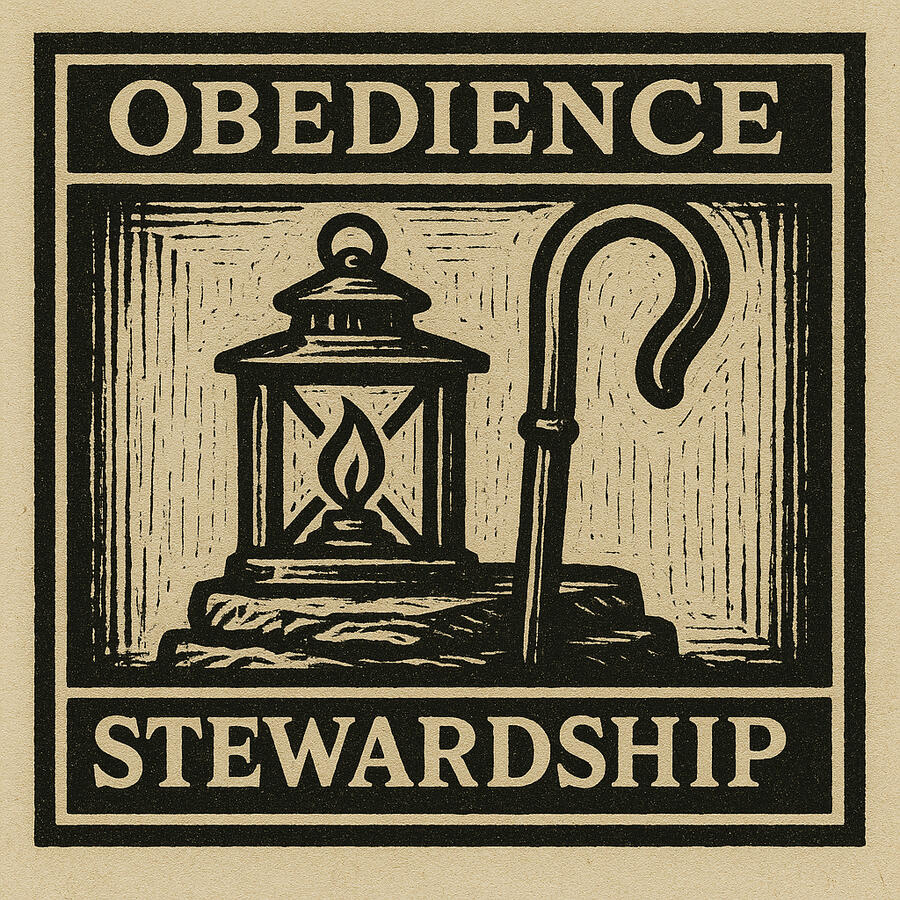
Compliance vs. Stewardship: Architecture After the Checklist
Much of contemporary architecture is optimized for compliance rather than care. Buildings are conceived, documented, and delivered through a dense web of checklists: zoning approvals, energy codes, accessibility standards, certifications, and risk-management protocols. Each box is ticked, each form filed, and each liability transferred. At the moment of occupancy, the project is declared a success.Yet what happens after that moment—after the ribbon cutting, after the photographs, after the architect’s contractual responsibility formally ends—is too often outside the profession’s field of vision.
This is not an argument against regulation. Codes, standards, and certifications exist for good reason. They emerged in response to real failures: unsafe buildings, discriminatory access, environmental damage, and public harm. Compliance matters. But compliance is not stewardship, and mistaking one for the other has quietly reshaped the ethical center of architectural practice.The Checklist Mentality
Modern architectural delivery systems reward precision in documentation and risk avoidance above all else. The architect’s success is measured less by how a building performs over decades than by whether it survives inspections, avoids litigation, and closes out cleanly. Sustainability, in this context, is often reduced to certification: a plaque on the wall, a line item in a marketing brochure, a point score that proves the building passed a standardized test.The problem is not that these systems exist. The problem is that they have become substitutes for judgment.A building can meet every applicable code and still be fundamentally irresponsible. It can comply fully with energy standards yet rely on systems so complex that maintenance becomes economically impossible. It can achieve sustainability certification while using materials that cannot be repaired, recycled, or safely removed. It can satisfy accessibility requirements while creating spaces that are hostile, disorienting, or unusable in daily life. Compliance ensures legality; it does not ensure wisdom.
When architecture is framed primarily as a compliance exercise, long-term thinking becomes someone else’s problem.Maintenance is deferred to owners who were never fully informed of future costs. Decommissioning is ignored because it lies beyond the architect’s contractual horizon. Environmental consequences are externalized, to be addressed later—if at all.Stewardship as an Ethical Obligation
Stewardship begins where compliance ends. It asks different questions, many of which are uncomfortable in a profession trained to prioritize delivery speed and risk management.Can this building be maintained by the people who will actually own and operate it?Will its materials age with dignity or fail catastrophically?
What happens when its original use ends?
Can it be adapted without demolition?If it must be removed, will it return to the landscape without leaving behind economic, legal, or environmental wreckage?These questions do not fit neatly into checklists. They require judgment, restraint, and a willingness to say no—to clients, to fashionable systems, and sometimes to the profession’s own habits. Stewardship recognizes that architecture is not a product delivered at occupancy but a long-term intervention in a living environment.Indigenous building traditions understood this intuitively. Structures were designed to meet immediate needs while remaining accountable to future conditions. Materials were chosen not for permanence as an abstract virtue, but for their ability to return to the land without scarring it. Longevity existed where appropriate; impermanence was not failure but foresight. In contrast, modern architecture often equates durability with moral superiority, even when that durability creates irreversible damage.The Illusion of Sustainable PermanenceOne of the most persistent myths in contemporary architecture is that permanence equals responsibility. Heavy construction, complex assemblies, and highly engineered systems are assumed to be inherently superior, even when they lock owners into costly maintenance cycles or make eventual removal impossible without public subsidy.
A building that cannot be affordably maintained is not sustainable.
A building that cannot be adapted is not resilient.A building that cannot be responsibly removed is not ethical.Architecture Without a Scar argues that sustainability must include the end of a building’s life, not just its beginning. Too many projects are designed as if they will exist forever, even though economic reality, climate change, and shifting social needs guarantee that they will not. When those buildings fail, the cost is borne not by the design team but by communities, municipalities, and future generations.Reclaiming Professional Judgment
The shift from stewardship to compliance did not happen overnight, and it did not happen solely because of regulation. It was reinforced by professional education that increasingly emphasizes theory over responsibility, by delivery models that fragment accountability, and by a legal environment that discourages moral engagement beyond minimum standards.
Reclaiming stewardship does not mean rejecting modern tools or abandoning regulation. It means restoring professional judgment to its rightful place. It means acknowledging that the architect’s responsibility does not end at substantial completion, even if contractual language says otherwise. It means designing with humility—accepting that not every site needs to be maximized, not every program needs to be monumental, and not every material needs to last centuries.Stewardship also requires honesty. Clients deserve to understand not just how a building will perform on day one, but what it will demand over thirty or fifty years. Communities deserve architecture that contributes without burdening them with future liabilities. The land itself deserves buildings that recognize their own impermanence.Architecture Without a Scar
A building that meets every standard yet cannot be maintained or removed responsibly still leaves a scar. That scar may not be visible immediately. It may emerge slowly, through deferred maintenance, abandoned systems, legal entanglements, or environmental damage. But it is no less real for being delayed.Architecture Without a Scar is not a call for nostalgia or retreat. It is a call for accountability—one that extends beyond compliance, beyond certification, and beyond the moment of occupancy. True sustainability is not a badge. It is an ethical stance, grounded in care for the future and respect for limits.Compliance may keep architects out of court. Stewardship keeps architecture out of regret.